Veneto
Across the River and into the TreesVeneto is more than a route into Venice in Richard Cantwell’s recollection: its waterways and roads preserve the outlines of a former battlefield, while its familiar landscape gives his wartime service a lasting claim on home. The region appears as both a working environment shaped by canals and hydroelectric diversion and a place where the dead, the living, and memory remain bound to the land.
Rivers, Roads, and Marshes
As Richard Cantwell travels toward Venice, the road crosses the Piave River and passes an old sunken road whose surface has become smooth and unremarkable. He can still make out the former positions. Canals border the straight road, their willows marking waterways that once held the war dead. The land’s present-day ordinariness sits beside this history: the road carries traffic, while people fish in the canals and ducks and geese gather there.
The terrain also forms a connected defensive geography. In the winter fighting remembered by Richard Cantwell, the old bed of the Piave River and the Sile River served as successive lines: if the first did not hold, the Sile offered a fallback. Beyond it lay open plain and routes toward the Veneto plain and Lombardy. The same road that once mattered as an approach to Venice is now the route on which he looks for the city across the marshes.
The Battlefield and Its Aftermath
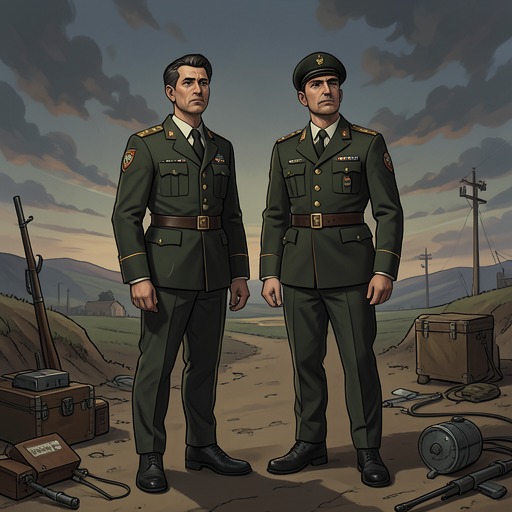
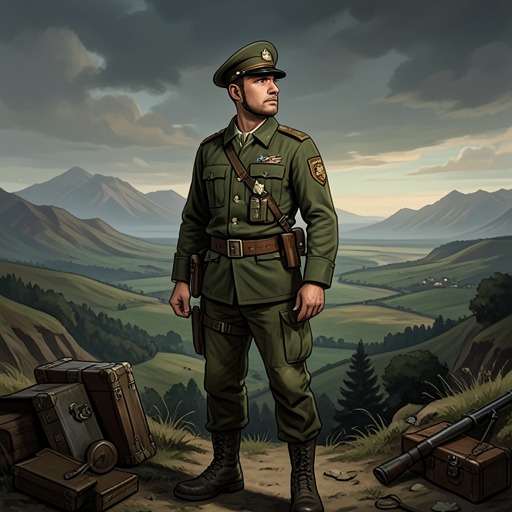
During the First World War, Richard Cantwell served as a lieutenant in a foreign army and fought in the Veneto. The Austrians attacked repeatedly through the winter, seeking to reach the road leading toward Venice. Their attacks followed heavy bombardments; when the shelling lifted, defenders checked their positions and counted their people, with little time to attend to the wounded before the next attack. The marshes made the attackers’ approach slow and exposed.
The canals also became part of the battlefield’s aftermath. After a major killing late in an offensive, the dead were put into the canals to clear the riverbank positions and road during hot weather. The canal gates downstream remained in Austrian hands and were closed, so the bodies stayed in the water. Once arrangements could be made, labor troops removed them at night and buried them near the road. They were later dug up again and reburied in a large ossuary near Nervesa. Richard Cantwell searches the roadside for signs of unusual greenness but sees none; the landscape gives him no simple visible marker of the graves.
Belonging and Comradeship
For Richard Cantwell, fighting in Veneto as a boy is part of what makes Venice his city. From the road, he sees the squared church tower on Torcello and the high campanile on Burano, with twelve sailing barges heading toward Venice. He remembers that during the winter defense he had fought along the canals without seeing the city; on a clear, cold day at Noghera, he had finally glimpsed it across the water, though he still did not enter it. Years later, he understands his claim to Venice through the fact that he fought for it and is recognized there as someone who did.
That history is shared with the Gran Maestro, another old inhabitant of Veneto who defended the country in his youth. Their greeting is a firm handshake between men whose military past and attachment to an often-fought-over homeland precede their present friendship. Looking back on one year of fighting, Richard Cantwell recalls that they won three major battles despite facing odds of three or four to one, and that more than 140,000 people died that year. Their capacity to speak lightly about war is set against the scale of those losses, not apart from it.
Changed Water and Living Landscape
The waterways are not fixed remnants of the past. Richard Cantwell remarks that the Piave River no longer contains water because it has been diverted for hydroelectric projects, and speculates that Francesco Pacciardi might fight there, though he doubts such fighting would last long. The remark makes the river both an altered piece of infrastructure and a possible future line of conflict. Veneto’s terrain can change through human intervention without losing its military associations.
The canals remain active in ordinary life: people fish in them, and ducks and geese use them. In winter, ice breaks and refreezes as a calling duck seeks security. Such details do not erase the history embedded in the roads and water; they place it beside seasonal animal life and everyday use. Veneto’s narrative significance lies in this uneasy coexistence: a landscape can look settled and productive while continuing to carry the memory of the battles fought to defend it.